
Executive summary
The traditional 9–5 job has long been seen as the safest path to success, but the world of work is changing. From shifting job security and workplace burnout to freelancing, flexible work and skill-based income, this article explores why conventional employment may not suit everyone in 2026 and what alternatives are emerging.
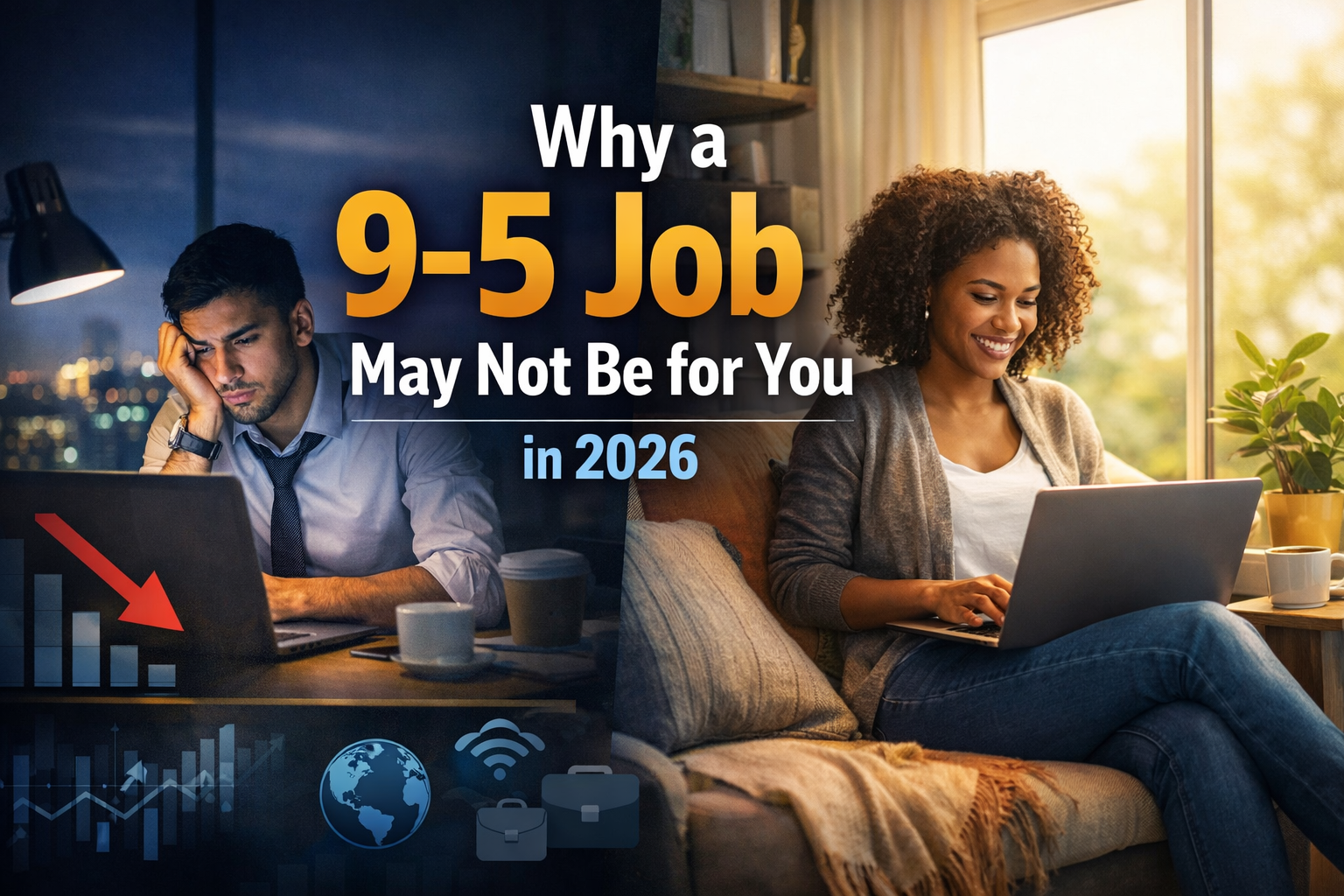
For decades, the 9–5 job has been positioned as the safest and most responsible path to success. Education leads to employment, employment leads to stability, and stability leads to a “settled” life. Yet by 2026, that narrative is under strain. Across industries and age groups, more people are questioning whether the traditional employment model is still fit for purpose. This isn’t driven by laziness or entitlement, but by structural changes in how work, technology, and income now function. This article is not anti-employment. Jobs remain essential. However, data increasingly shows that the 9–5 structure is no longer universally effective — and for some people, it may actively work against their strengths.
The Structure of Work Has Changed Faster Than Jobs Have
According to research from World Economic Forum, nearly 44% of workers’ core skills are expected to change within five years, driven largely by automation, AI, and digital tools. Yet most 9–5 roles still emphasize fixed hours and physical presence rather than output, adaptability, or problem-solving. At the same time, a global study by McKinsey & Company found that productivity does not increase linearly with hours worked. In many knowledge-based roles, output peaks in shorter, focused intervals and declines with prolonged, rigid schedules — a direct mismatch with the traditional workday. In short, the economy has become flexible, but work structures often haven’t.
Burnout Is No Longer an Exception — It’s a Pattern
Workplace burnout is no longer limited to high-pressure executive roles. According to Gallup, over 40% of employees globally report experiencing daily stress at work, and younger workers report even higher levels of emotional exhaustion. What’s striking is that burnout is not strongly correlated with workload alone. Gallup’s data shows that lack of autonomy, poor alignment with strengths, and unclear purpose are stronger predictors of disengagement than long hours. This explains why many high-performing employees feel drained even when they are “doing well” on paper.
Job Security Is No Longer Tied to Employment
One of the strongest arguments for the 9–5 has always been security. However, labor market data increasingly challenges this assumption. The International Labour Organization reports that non-standard work — including contract, freelance, and project-based roles — continues to grow faster than permanent employment globally. At the same time, layoffs and restructurings have become routine even in traditionally stable sectors such as tech, finance, and professional services. Meanwhile, research consistently shows that workers with portable, in-demand skills recover faster from job loss than those whose value is tied to a single employer or role. In practical terms, skills have become a more reliable form of security than contracts.
Why Some People Perform Better Outside the 9–5 Model
Data also helps explain why certain people struggle in traditional jobs but thrive elsewhere. Studies on self-directed work environments indicate that autonomy significantly increases motivation and performance for individuals who are internally driven and problem-oriented. A large-scale review of remote and flexible work arrangements found that employees with high autonomy reported higher job satisfaction and equal or better productivity compared to their office-bound counterparts. This aligns with what we observe in freelancers, consultants, and small business operators: they often work longer hours, but with greater engagement because effort and reward are directly linked. The issue is not effort — it is ownership.
The Rise of Hybrid Work and Portfolio Careers
By 2026, the fastest-growing income model is not full-time employment or full-time entrepreneurship, but a hybrid approach. Research from global labor market studies shows a steady rise in portfolio careers, where individuals combine employment with freelance work, consulting, digital products, or small service businesses. This model spreads risk, increases income resilience, and allows people to test alternatives without abandoning stability. For many, this hybrid path offers a practical middle ground between dependence on a single employer and the pressure of full entrepreneurship.
A Critical Reality Check
Despite these trends, the 9–5 remains the best option for many people, particularly in seasons that require predictability, benefits, or lower risk. Data consistently shows that unstructured work without discipline leads to income volatility and stress. Avoiding the 9–5 without skills, planning, or self-management often replaces one form of pressure with another. The question is not whether jobs are good or bad. It is whether the structure matches the individual.
Rethinking Work in 2026
The evidence is clear: the world of work has diversified, but our expectations have not always kept pace. If a 9–5 job provides stability, growth, and peace of mind, it remains a powerful tool. If it consistently produces stress, disengagement, and stagnation despite your best efforts, that is not a personal failure — it is a signal. In 2026, success is less about following a single path and more about designing a work life that aligns with both economic reality and human capacity. For a growing number of people, that path simply does not run from nine to five.