
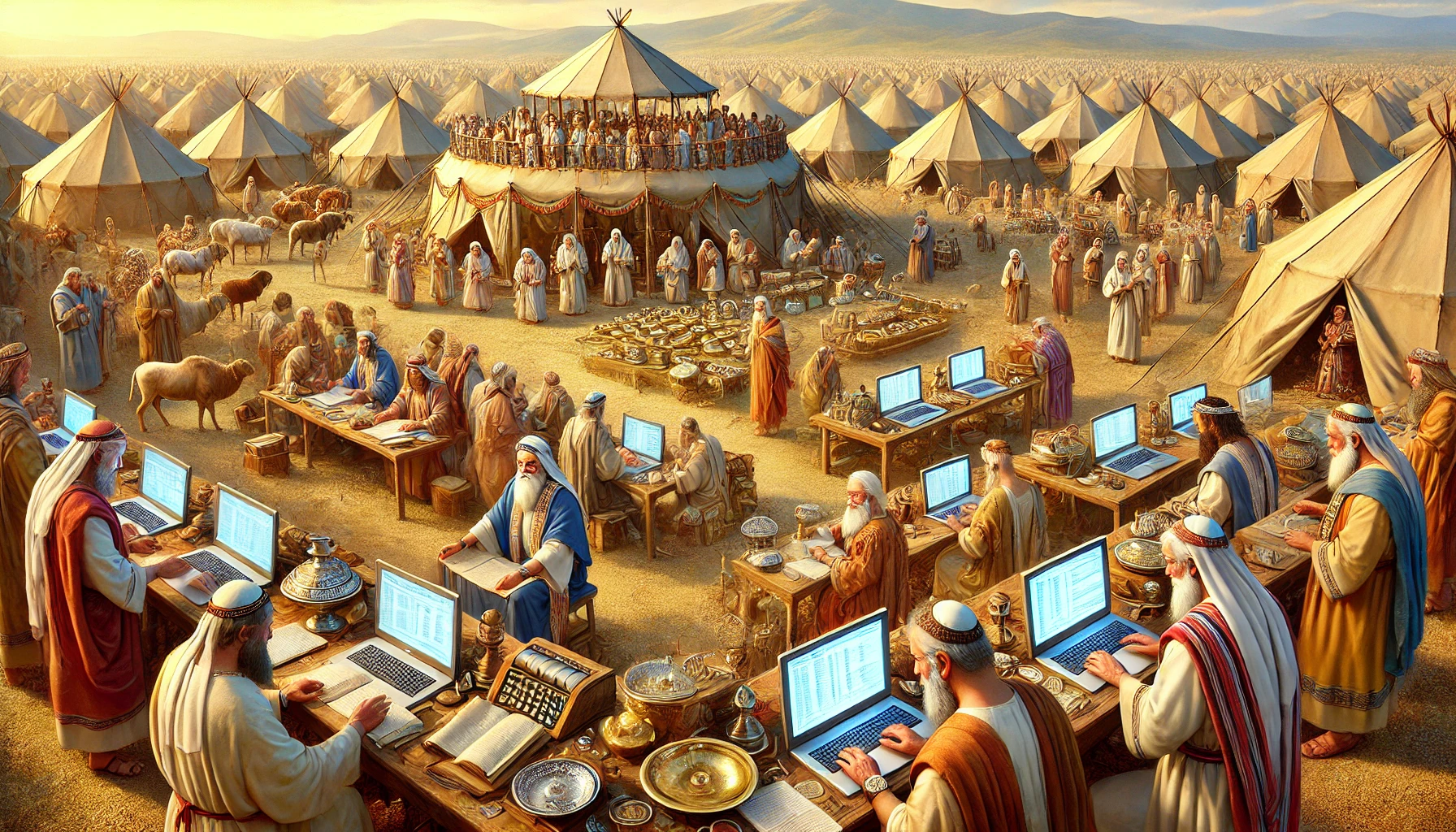
The Book of Numbers, the fourth book of the Bible, provides a detailed account of the Israelites’ journey through the wilderness. Central to this narrative is the practice of data collection and reporting, highlighting the significance of organized and systematic record-keeping in the life of the Israelite community. Let’s explore these practices and their implications through the lens of the Book of Numbers, along with insights from other scripture references, modern authors, and the importance of data security.
The Census: Organizing the Community
The Book of Numbers opens with God commanding Moses to census the Israelite community. Numbers 1:2-3 says, “Take a census of the whole Israelite community by their clans and families, listing every man by name, one by one. You and Aaron are to count according to their divisions all the men in Israel who are twenty years old or more and able to serve in the army.”
Purpose and Significance:
- Military Organization: The census was essential for military preparation, identifying all men eligible for military service. This ensured that the community was ready for any conflicts they might face during their journey.
- Tribal Structure: By organizing the people according to their tribes and clans, the census helped maintain the social and familial structure of the Israelite community. This organization was crucial for managing the logistics of their encampment and travel.
Meticulous Record-Keeping
The Book of Numbers is meticulous in its record-keeping, listing the numbers of each tribe. Numbers 1:20-46 provides a detailed breakdown of the census results, listing the number of men in each tribe. For example, Numbers 1:21 records, “The number from the tribe of Reuben was 46,500.”
Lessons in Detail:
- Accuracy: The detailed listing underscores the importance of accuracy in data collection. Each tribe’s numbers were recorded precisely, ensuring that the community had a clear understanding of its composition.
- Transparency: By providing a detailed account, the process remained transparent. Everyone in the community could see the results of the census, promoting trust and accountability.
- Comprehensiveness: The meticulous record-keeping reflects the comprehensiveness of the data collection process, capturing the entire community’s demographic details with precision.
Resource Allocation
The census data also played a crucial role in resource allocation. Numbers 2 outlines how the tribes were to camp around the Tabernacle and describe their marching order. This organization was based on the census data, ensuring that resources and responsibilities were distributed equitably.
Implications for Resource Management:
- Equitable Distribution: The census ensured that resources were distributed according to the size and needs of each tribe, promoting fairness and efficiency.
- Logistical Planning: The detailed data facilitated logistical planning, making the movement and encampment of such a large community manageable.
Counting Offerings and Gifts
In addition to population data, the Book of Numbers meticulously records offerings and gifts brought by the Israelites. Numbers 7 provides a detailed account of the offerings each tribe brought for the dedication of the altar. Each offering was listed precisely, including the weight of silver platters, bowls, and gold dishes.
Detailed Account of Offerings:
- Numbers 7:12-17 records the offering from the tribe of Judah, starting with, “The one who brought his offering on the first day was Nahshon son of Amminadab of the tribe of Judah. His offering was one silver plate weighing a hundred and thirty shekels, and one silver sprinkling bowl weighing seventy shekels, both according to the sanctuary shekel, each filled with the finest flour mixed with olive oil as a grain offering; one gold dish weighing ten shekels, filled with incense; one young bull, one ram and one male lamb a year old for a burnt offering; one male goat for a sin offering; and two oxen, five rams, five male goats and five male lambs a year old to be sacrificed as a fellowship offering.”
- Detailed Records: Each tribe’s offerings were recorded with exact weights and measures, ensuring that every gift was accounted for accurately. This meticulous record-keeping demonstrated respect for each contribution and maintained transparency.
Special Censuses and Additional Data
In addition to the general census, the Book of Numbers records special censuses and additional data collections. For example, Numbers 3:14-15 records a separate census for the Levites, who had distinct religious duties: “The Lord said to Moses in the Desert of Sinai, ‘Count the Levites by their families and clans. Count every male a month old or more.’”
Specialized Data Collection:
- Role-Specific Data: Collecting specific data for the Levites highlights the importance of role-specific data collection. Different roles within the community required tailored data to manage their unique responsibilities effectively.
- Flexibility: Including various types of censuses demonstrates flexibility in data collection, adapting to the community’s changing needs.
Reporting and Accountability
The Book of Numbers emphasizes the importance of reporting and accountability. After the census, Moses reported the findings to the community. Numbers 1:44-46 concludes, “These were the men counted by Moses and Aaron and the twelve leaders of Israel, each one representing his family. All the Israelites twenty years old or older who were able to serve in Israel’s army were counted according to their families. The total number was 603,550.”
Principles of Reporting:
- Community Reporting: Reporting the census results to the entire community ensured that everyone was informed and that the process was transparent.
- Accountability: By publicly sharing the data, the leaders held themselves accountable to the people, fostering trust and credibility.
Insights from Other Scriptures
Other books of the Bible also provide examples of meticulous data collection and reporting. For instance, in 1 Chronicles 21:1-5, King David ordered a census of Israel, showing the continued importance of population data for governance and resource allocation.
Additionally, the detailed genealogies in books such as Genesis and the Gospels of Matthew and Luke highlight the significance of record-keeping in preserving cultural and familial heritage.
Insights from Modern Authors
Modern authors and scholars emphasize the importance of ethical and accurate data practices. For example, Dr. Thomas H. Davenport’s book “Competing on Analytics” underscores the value of data in decision-making and the necessity for integrity in data management. Similarly, in “The Data Warehouse Toolkit,” Ralph Kimball discusses the importance of meticulous data organization and accuracy in modern data warehousing.
Data Security: A Modern Consideration
In today’s digital age, data security has become a critical concern. While the biblical accounts may not directly address modern cybersecurity, the principles of protecting and respecting the information align with biblical values. Proverbs 3:21-23 states, “My son, do not let wisdom and understanding out of your sight, preserve sound judgment and discretion; they will be life for you, an ornament to grace your neck. Then you will go on your way in safety, and your foot will not stumble.”
Lessons in Data Security:
- Protecting Sensitive Information: Just as the Israelites were careful in their meticulous record-keeping, modern practices must ensure that sensitive data is protected from unauthorized access and breaches. This involves implementing robust cybersecurity measures and adhering to data protection regulations.
- Integrity and Trust: Maintaining the integrity of data is crucial. Ensuring that data is accurate, untampered, and securely stored fosters trust within the community and among stakeholders.
- Ethical Handling: Ethical handling of data aligns with the biblical principles of honesty and transparency. It is essential to treat data with the respect and care it deserves, ensuring it is used for its intended purpose and not misused or exploited.
Conclusion
The Book of Numbers provides a compelling example of data collection and reporting in a biblical context. From the detailed census to the specific data on offerings and gifts, the practices recorded in this book highlight the importance of accuracy, transparency, and accountability. The meticulous record-keeping reflects a dedication to thoroughness and precision that ensures the community’s orderly functioning and fair resource distribution.
These timeless principles, supported by insights from other scriptures and modern authors, offer valuable lessons for contemporary data practices. Systematic and ethical data collection and reporting can support organized, fair, and efficient community management. By reflecting on the practices in the Book of Numbers, we can draw inspiration for our data practices, ensuring they are conducted with integrity and purpose, much like the meticulous records kept during the Israelites’ journey through the wilderness. Additionally, modern considerations of data security reinforce the need to protect and respect the information we gather, ensuring it is used responsibly and ethically.